ADA-Compliant Portable Restrooms: Preparation Rentals With Ease Of Access in Mind
@remingtonofbc535
October 3, 2026 · 15 min read
When people intend mobile bathroom services, they typically start with headcount, period, and budget. Accessibility frequently gets pressed a little later in the discussion, often due to the fact that organizers think one larger device someplace on site will certainly cover the need, and in some cases since they are uncertain what the guidelines actually demand. That hesitation can develop genuine troubles for guests, workers, and attendees who require an obtainable bathroom and ought to not need to look for it, battle to reach it, or find that it is technically existing however functionally unusable.
This is where thoughtful planning matters. An ada certified mobile restroom is not merely a basic device with a bigger footprint. It has to work for the people that rely on it. That implies the system itself, the course to it, the method it is determined, and the room around all of it matter. If any type of one of those pieces is ignored, the outcome can look certified theoretically while falling short in practice.
I have seen this happen at community events, church events, momentary task staging areas, and outdoor personal gatherings that unexpectedly grew larger than anyone very first thought of. A person orders an ada mobile bathroom since they intend to do the best point. The supplier provides it. After that the unit gets positioned on irregular grass behind a food outdoor tents, or on soft crushed rock that turns to ruts after a few hours of traffic. No person intended to develop an obstacle, yet intent does not alter the experience for the individual who can not utilize the toilet independently.
What the ADA needs for portable bathroom rentals
For portable bathroom rentals in the USA, the controlling government criterion is the 2010 ADA Requirements for Accessible Layout, as analyzed by the Accessibility Board and the Division of Justice. That framework is what rental planning needs to be developed around. For collections of mobile single-user toilet units, a minimum of 5 percent of the systems in each cluster should be accessible. That applies also at short-lived events.
That 5 percent guideline catches lots of people off guard. They presume ease of access can be dealt with by placing one ada certified mobile bathroom somewhere on a large property. The common concentrates on each cluster, not just the total number across a whole occasion. If you divided restrooms into different banks throughout a fairground, sports field, festival route, or workplace, you require to think collection by collection. A site can be well provided overall and still fail the practical test if an obtainable system is missing from the location where individuals actually require one.
The accessible unit need to likewise be related to the International Icon of Ease Of Access. That appears basic, yet it matters. Individuals must not need to open up numerous doors or ask staff for directions to find out which system is the easily accessible one. Clear recognition lowers anxiety and protects dignity.
The device likewise needs an obtainable route and entryway. If ramps or touchdowns are required, those features have to adhere to ADA technical requirements. This is one of the most typical preparation failures since individuals concentrate on the toilet box itself and neglect the ground problems around it. A certified system positioned at the top of a sloppy rise or behind a narrow gate does not deliver significant access.
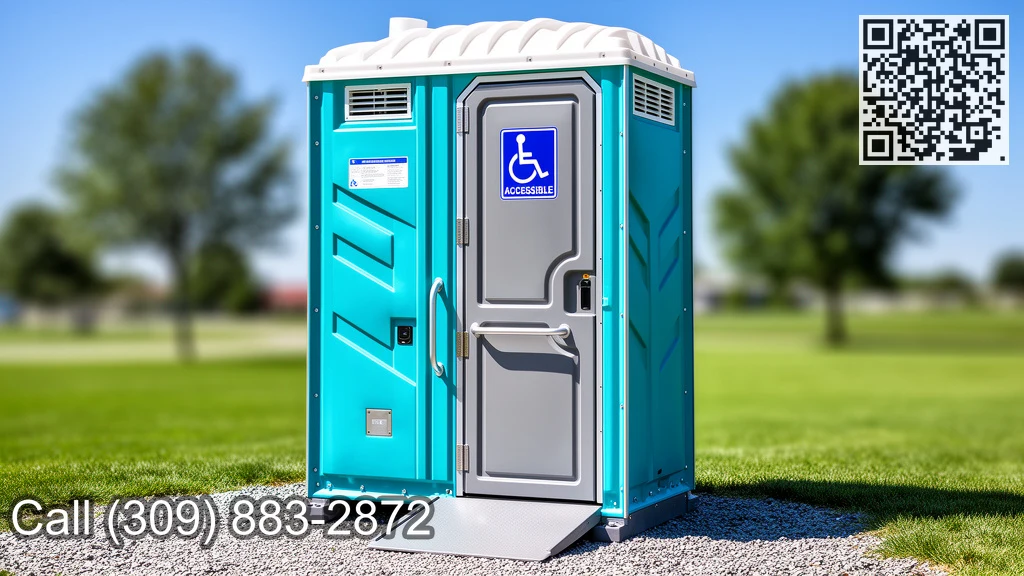
Inside the device, technical requirements likewise apply. The commode area should satisfy appropriate requirements for clearances, transforming space, door navigating clearances, and the appropriate guidelines for grab bars and water wardrobe clearances. That is why a true ada compliant available portable washrooms setup depends upon the device version and format, not simply the salesperson claiming, "This one is the easily accessible one."
The preparation mistake that creates the most trouble
The most significant mistake is dealing with ease of access as an add-on instead of a starting condition.
If you wait up until completion of the rental order to ask for an ada accessible portable restroom, you are most likely to settle for whatever takes place to be readily available. You additionally minimize your choices for correct positioning. On busy weekends or throughout large seasonal events, supply can tighten up, particularly for specialty units. Even if a supplier can supply an ada portable bathroom, your site may already be set out in a manner that leaves only poor placement choices.
A far better approach is to intend the available devices at the exact same time you map traffic circulation, car park, queuing, and solution locations. Think about how an individual obtains from arrival point to bathroom and back once again without detours, high grades, or blockages. Think about who will use the site after dark, in damp climate, or during height crowding. Availability is not different from procedures. It is operations.
At one outside event I aided review after the truth, the coordinators had actually technically rented an ada handicap easily accessible portable bathroom. The issue was that they positioned it past a row of supplier camping tents because they desired it "out of the way." Throughout the occasion, the path narrowed as outdoors tents shifted and supply boxes built up behind cubicles. The washroom existed, the symbol got on the door, and yet several participants could not easily reach it. The concern was tolerable intent. It was bad sequencing. They made layout decisions initially and availability choices second.
Why "available" and "useful" are not constantly the very same thing
This is the component that is worthy of sincerity. A rental company may provide an ada certified portable toilet that meets the needed technological functions, however the organizer or website manager still manages whether the experience is usable on the ground. The ADA common reaches beyond the covering of the system. The route matters. The entry matters. Maneuvering room matters.
A few little choices can undo the benefit of the best unit. Placing it where vehicles obstruct the method, fencing it inside a limited solution passage, or setting it on a surface that changes under wheels can all transform a compliant item right into an inaccessible experience.
The most trustworthy coordinators I understand stroll the path face to face prior to delivery preferably. They do not simply factor at a place on a site map. They consider grade, width, ground firmness, drain, and neighboring blockage. They ask what happens if it rains. They ask whether maintenance trucks can service the system without compeling short-term obstacles into the path of travel. That kind of practical reasoning saves shame later.
Cluster mathematics is straightforward, however site design is where judgment comes in
The 5 percent policy is straightforward in idea, however in genuine planning, the more difficult inquiry is just how you specify and position clusters. If an https://pristineportablesil.com/pristine-portables-reputation-report/ occasion has mobile bathrooms near the primary phase, near sports areas, and near car parking, those are not just one large consolidated toilet area because they all take place to be on the very same building. Individuals utilize the closest bank offered to them. If a person with a flexibility impairment needs to go across half the venue to locate the only easily accessible device, the configuration is missing the point.
This is why great site preparation usually really feels less like checkbox conformity and more like audience empathy. Picture the visitor that arrives through the additional entrance. Photo the volunteer who works six hours at the border booth. Photo the relative that is helping someone navigate the grounds during a jampacked period. Where will they sensibly anticipate to find an easily accessible washroom? That is where one requires to be.
There is additionally a difference in between lawful minimums and reasonable planning. The minimum demand tells you the flooring, not constantly the best quantity for convenience and circulation. I would certainly be careful not to mention a formula beyond the verified regulation, but it is fair to state that some websites take advantage of buying greater than the bare minimum if the grounds are spread out, if participation patterns are uneven, or if heavy usage is anticipated in one area.
Construction websites call for a mindful distinction
One detail that can confuse customers is the therapy of building and construction sites. The ADA Standards distinguish portable commode units at building and construction websites used solely by building employees, which are exempt from the portable-toilet availability scoping need mentioned in the older 1991 criterion. That exception is slim and context issues. For general portable bathroom rentals, the accessible-unit need remains.
That distinction ought to not be extended past what it says. If a site is not limited to building employees in the way the exemption contemplates, organizers must not assume they are outside the accessibility demands. It is one of those locations where individuals hear a fragment of a policy and misapply it broadly. When doubtful, reduce, validate what setting you are actually handling, and prevent making assumptions based on a single label like "task site" or "short-lived usage."
What to ask prior to you sign the rental order
A brief conversation with the supplier beforehand can prevent a surprising quantity of difficulty. You do not need to become a code specialist over night, but you do require enough clearness to know what you are receiving and exactly how it needs to be installed.
Here are the inquiries worth asking:
- Is this system a true ada compliant mobile toilet developed to fulfill applicable ADA toilet-room technological requirements?
- How ought to the device be placed so the available route and entryway remain usable on this details site?
- Does this area need a ramp or landing, and if so, just how will that be managed in such a way that meets ADA requirements?
- Is the device plainly noted with the International Symbol of Accessibility?
- If we have numerous bathroom clusters, how many obtainable devices need to be designated per cluster rather than to the website as a whole?
That list might sound standard, however it changes the conversation. As opposed to getting a generic "big mobile toilet," you are signaling that availability is part of the extent, not an afterthought.
Placement decisions that are worthy of more attention
Most gain access to problems are placement problems.
Ground surface area is the very first point I would certainly consider. A site that seems fine when completely dry can become deeply bothersome after a couple of hours of foot traffic or climate. Soft lawn, loosened fill, or churned crushed rock can affect accessibility even before a person gets to the door. The requirements require an easily accessible route and entrance, so it is not nearly enough that a solution truck can drop the system there.
Next comes crowd actions. Portable bathrooms typically wind up beside staging areas, dumpsters, food lines, or short-lived secure fencing since those rooms really feel simple to assign. Then the paths tighten as the occasion comes active. A path that looked charitable during setup might end up being narrow as soon as colders, stanchions, cable covers, or supply carts show up. In sensible terms, the available route needs to be protected from the creep of occasion clutter.
Door handling clearance is another factor that individuals forget due to the fact that they presume it is just an indoor concern. In reality, the room outside the door impacts whether an individual can come close to, open, and enter the system smoothly. If the door swings right into a cramped passage or toward a sloped spot of ground, the trouble starts prior to the person crosses the threshold.
I additionally suggest considering presence. An ada portable bathroom does not require to be showcased, however it ought to be very easy to locate. If a visitor needs to ask three employee where the obtainable device is, the site is not functioning in addition to it should. Signs, line of sight, and user-friendly positioning all help.
Temporary occasions still count
There is a persistent misconception that because an occasion is momentary, the access assumptions are in some way loosened up. They are not. The Gain access to Board has explained that the accessible-unit need uses even at short-lived occasions. Temporary conditions can make ease of access planning harder, but they do deficient optional.
This issues for celebrations, exterior wedding celebrations, sporting events, metropolitan events, charity events, fairs, and pop-up activations. "It is only for someday" is not a defense to inadequate preparation. Somehow, temporary occasions need even more discipline due to the fact that there is less time to correct blunders once the crowd arrives.
I have additionally seen short-term events make a false economy decision by cutting the accessible unit first when budget stress hits. That is precisely the wrong area to cut. If price ends up being an issue, lower attractive bonus, change nonessential facilities, or reassess layout prior to you compromise access. An individual who needs an ada portable toilet is not requesting a premium feature. They are requesting for fundamental accessibility to the occasion every person else is attending.
The language customers use can create confusion
Search terms and supplier descriptions are not constantly consistent. You will certainly see expressions like ada portable commode, ada mobile toilet, ada certified portable toilets, ada-compliant portable commode, and ada certified available mobile toilets used somewhat reciprocally in advertising and marketing. In some cases a seller implies a truly compliant easily accessible device. Sometimes they just suggest "bigger than requirement."
That is why item tags alone are inadequate. If somebody promotes an ada mobile toilet service, the actual inquiry is whether the unit and the setup will certainly satisfy the applicable accessibility requirements. A larger door or a more spacious cabin does not by itself address that inquiry. Clearances, transforming room, door handling, route, entrance, and identification all matter.
For customers, precise language aids. As opposed to asking for "a handicap porta potty," define the demand in compliance terms. Request for an ada compliant portable toilet and verify how it will be placed. If you have multiple toilet collections, claim that in advance. If the site surface is irregular or remote, claim that as well. Suppliers can typically react better when the demand is concrete.
Accessibility belongs to hospitality
There is a lawful measurement to this topic, yet there is additionally a human one. People remember how a website made them feel. An event can have thoughtful shows, beautiful design, or a solid turnover and still leave a sour memory if basic requirements were hard to fulfill. Toilet gain access to rests high up on that list since it influences convenience, privacy, and freedom in a very instant way.
When ease of access is succeeded, the majority of people hardly observe the planning behind it. The route feels evident. The device is easy to discover. The entrance works. The user can take care of the check out with dignity and without requiring special help. That is the typical worth aiming for. Peaceful competence.
I have heard coordinators fret that focusing on compliance will make the planning procedure cold or governmental. In method, I have actually found the reverse. Accessibility preparation tends to develop your understanding of the guest experience generally. When you begin believing thoroughly concerning paths, surface areas, congestion factors, and wayfinding for an available bathroom, you typically enhance the website for everyone else too.
A practical means to examine your website prior to delivery day
Before the device arrives, it helps to do one based testimonial of the actual area. This does not require to be sophisticated. It simply requires to be honest.
Use this quick lens:
- Can a person reach the restroom by an available path without crossing unpredictable, obstructed, or excessively tight spaces?
- Is the device in the very same general area where people would fairly anticipate washroom accessibility, instead of separated much away?
- Will the entry remain functional after fencing, vendor gear, group lines, and maintenance demands are added?
- Is the accessible unit determined clearly with the International Icon of Accessibility?
- If there is more than one washroom collection, does each cluster fulfill the accessible-unit requirement as opposed to depending on one far-off unit?
That final walk-through catches a number of the issues that are expensive or embarrassing to take care of later.
Compliance is obtaining broader interest, not less
Even if your existing concern is strictly about toilet services, it deserves seeing the more comprehensive environment. ADA compliance is getting sustained focus across sectors. Recent government guidance around internet and mobile availability for state and local governments shows that the conformity landscape is active and evolving, not fading right into the history. That does not transform the technical rules for mobile restrooms, however it does advise organizations that accessibility is an existing operational responsibility.
For event coordinators, districts, colleges, nonprofits, and exclusive hosts, that wider context ought to motivate a more mature way of thinking. Access is not a side topic passed on in the nick of time. It is part of accountable planning, similar to security, insurance coverage, and group flow.
Getting it right without overcomplicating it
The good news is that available bathroom planning is manageable when you start early and remain certain. You do not require a remarkable overhaul or a legal memo for every event. You require the appropriate device, enough of them in each cluster, correct identification, and a truly accessible course and entry. You additionally need the self-control to secure that arrangement once the remainder of the site fills in around it.
If you are buying an ada compliant mobile bathroom for the very first time, maintain the focus on feature. Where will people need it? Just how will they arrive? Will the path still function three hours into the occasion, after climate, web traffic, and configuration sprawl have had their say? Those are the questions that separate a merely delivered unit from an absolutely accessible one.
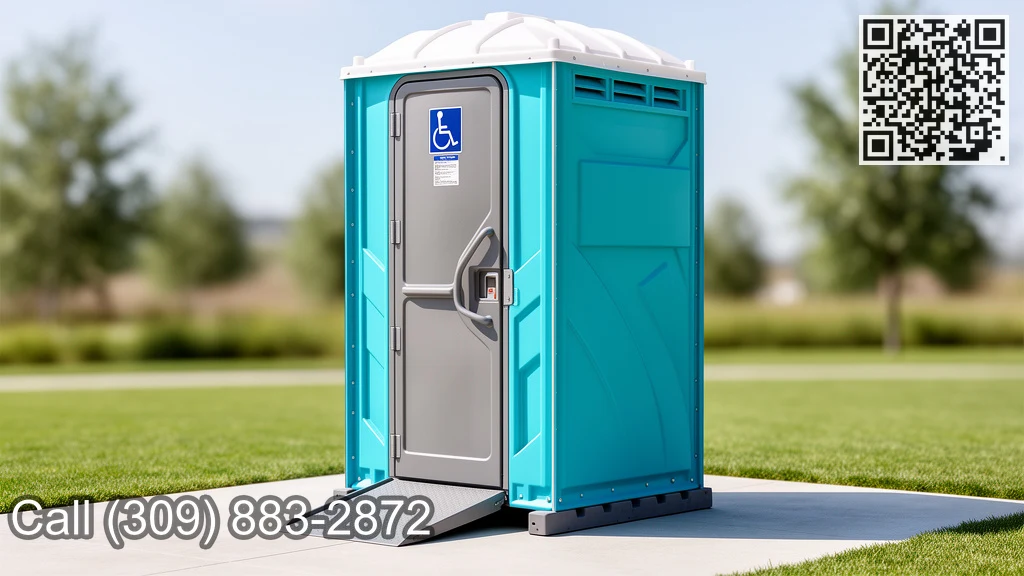
Handled well, an ada easily accessible mobile bathroom does greater than satisfy a demand. It tells guests and workers that their existence was anticipated, respected, and prepared for. That is what ease of access in technique ought to really feel like.
 Ask ChatGPT
 Ask Grok
 Ask Perplexity
 Ask Claude
 Ask Google AI
 Ask You